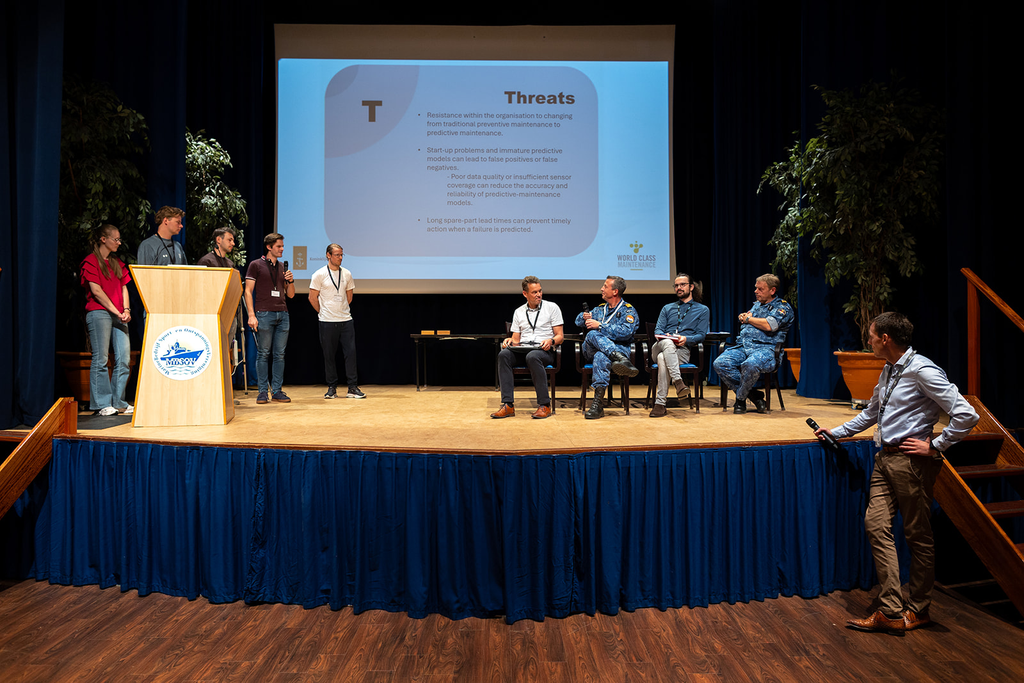
The fifteenth edition of the WCM Summer School took place from August 24 to 28 in Den Helder. For one week, forty young professionals and students focused on how the Royal Netherlands Navy can transition from periodic to condition-based and predictive maintenance. During the closing session, eight teams presented their solutions, resulting in diverse proposals regarding technology, data, organization, contracting, and industrial collaboration.
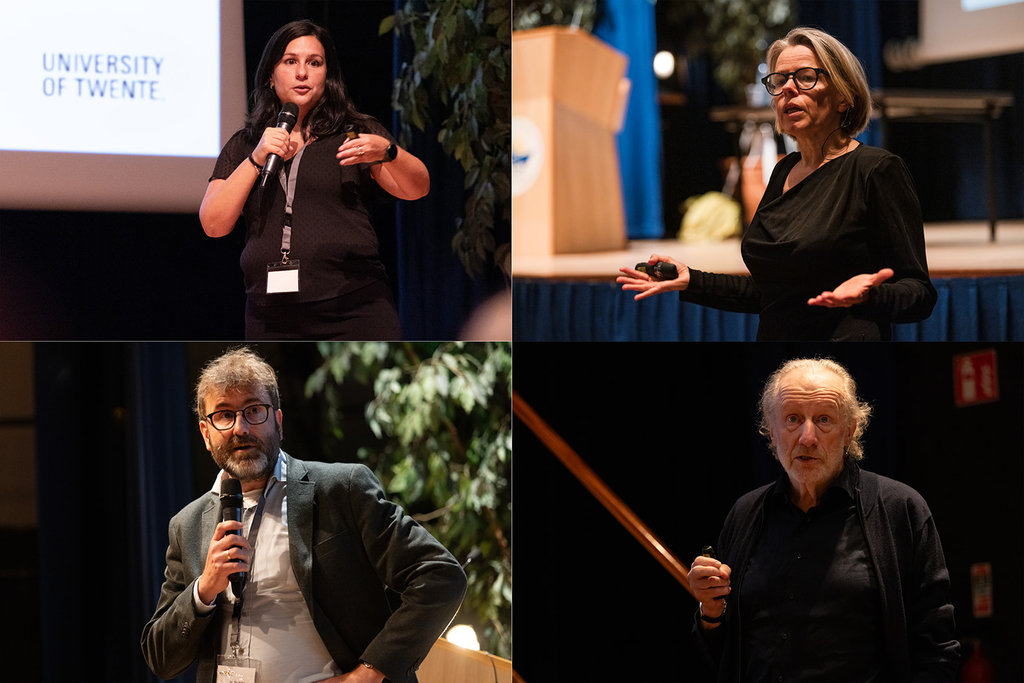
Summer School director Jan Braaksma opened the final session on Friday afternoon. He welcomed everyone and reflected on fifteen years of the WCM Summer School. During this period, more than six hundred students and young professionals have participated. Braaksma noted that over the years, there has also been “a significant development in the level of the practical cases.”
This year’s case fits that narrative perfectly. The Royal Netherlands Navy is on the threshold of a large-scale fleet renewal. In the coming years, dozens of new, high-tech ships will be commissioned. Simultaneously, crews are becoming smaller and the availability of technical personnel is decreasing. To ensure maximum availability for the new fleet under these circumstances, the Navy wants to move from strictly periodic maintenance to condition-based and, ultimately, predictive maintenance. This requires sensors, reliable data, and algorithms, but also demands organizational changes, different competencies, and closer cooperation with industry and knowledge partners.
The war of tomorrow
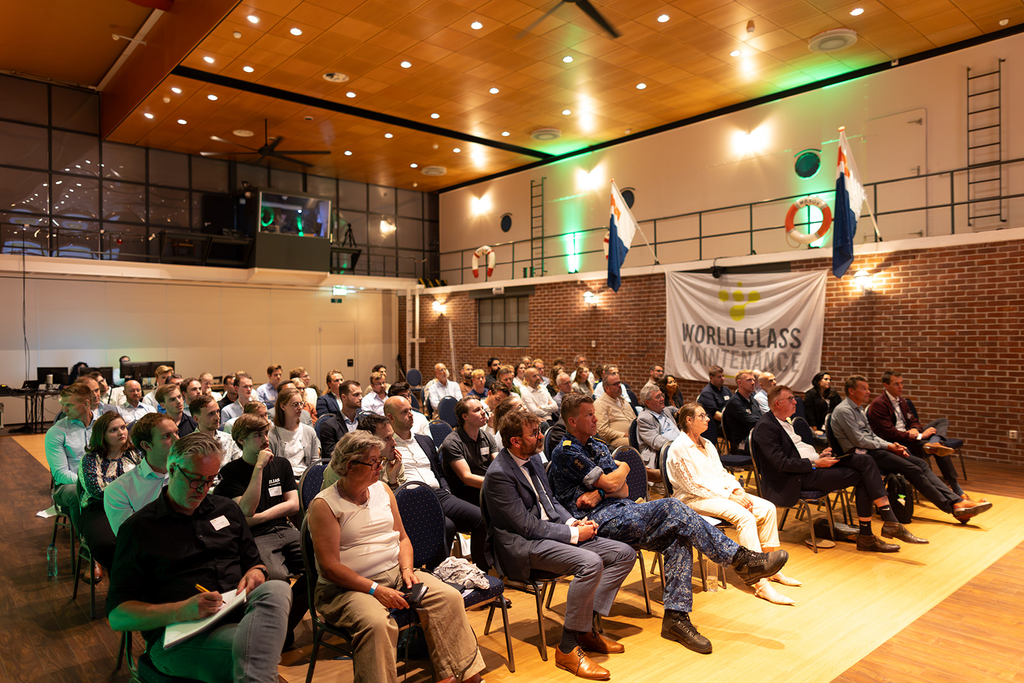
Following Braaksma, Captain (Navy) Olaf Binnenhei took the floor. As the head of Maritime Maintenance at DMI (the Directorate for Material Maintenance), he outlined the scale of the task. DMI employs about 3,200 people and is responsible for maintaining more than a hundred large and small vessels, as well as unmanned systems. At the same time, the world in which the Navy operates is changing rapidly. Geopolitical tensions are rising, and new threats and technologies emerge at a high pace. “We are trying to fight the war of tomorrow with the technology of yesterday,” Binnenhei summarized the challenge. Consequently, nearly the entire fleet will be replaced in the coming years.
More than just technology
Until the new ships arrive, the aging fleet must remain operational while being deployed more intensively, modernized intermittently, and requiring increasingly complex maintenance. This is complicated by an aging workforce and a difficult influx of new technicians. According to Binnenhei, this combination makes smarter, more data- and condition-driven maintenance necessary. While the new fleet offers opportunities for this, the shift requires more than just new technology: processes, organization, and the way maintenance is perceived must also change. He summarized his goal simply: “Keep the ships ready, keep them relevant, and make sure they are available when the Netherlands needs them.”
Collaborating without a boss
WCM director Prof. Dr. Henk Akkermans then placed the Navy case in a broader perspective. For over thirty years as a professor at Tilburg University, he has focused on how people and organizations can successfully collaborate when no one is technically “in charge.” According to him, hard factors such as data, technology, and contracts are at least as important as trust and informal cooperation. He sees exactly this challenge in the Navy’s transition, which depends on OEMs (Original Equipment Manufacturers), knowledge institutions, and other partners. His message to the participants was not just to come up with smart technical solutions, but primarily to consider how all these parties can actually work together and share knowledge and data.
Back to student life
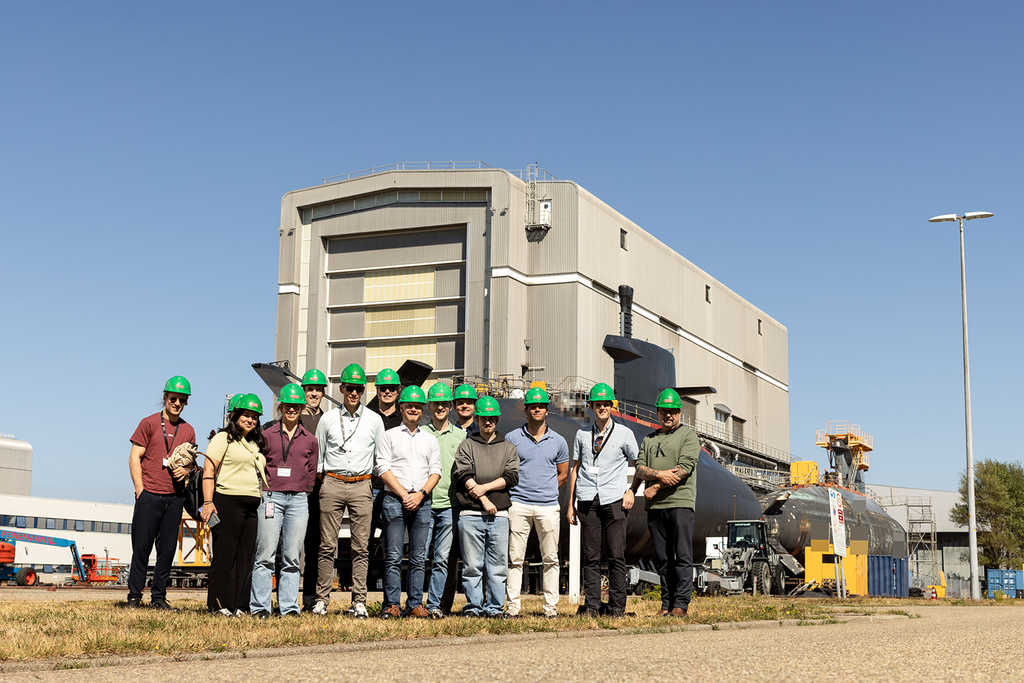
For the participants, the Summer School meant an intense week of lectures, workshops, a visit to the shipyard, and collaboration on the case. Martijn van Dijk of Rijkswaterstaat described it as an “inspiring and intensive week.” “It did make me take a look in the mirror. We tend to look a lot at data, but it is good to involve more perspectives.” Christian Wilbers, a maintenance engineer at Thales who recently entered the maintenance sector, saw the week primarily as an opportunity to get to know the field better, particularly the module on Risk Management. Sharo Al Talabani, a maintenance engineer at SPIE Netherlands, chose to participate partly due to positive experiences from colleagues. “We did many cool things last week, including a visit to the DMI shipyard. The lectures were interesting; I felt like a student again.”
Eight directions
Then came the time for the eight teams to show what their week of lectures, workshops, discussions, and collaboration had produced. The solutions varied greatly. Team Ship Happens proposed using digital twins to monitor the current condition of systems as a basis for building predictive maintenance. The jury pointed out the complex cooperation between the Navy and OEMs: who develops and manages such a digital twin, and what information can parties share? The Rust Busters looked for a solution in performance-based logistics, with availability as the primary joint KPI and factors such as maintenance response, required man-hours, and unplanned port returns as metrics. In this scenario, DMI retains control over maintenance.
“The transition to condition-based and predictive maintenance requires more than just new technology.”
1 Sustainment advocated for an initially larger role for OEMs in maintenance, linked to long-term performance-based contracts. Through knowledge transfer and training, the Navy would then become increasingly independent. The jury offered a practical caveat: will OEM employees be available when a naval ship is operating in a risk zone? Contracting 4 Better Maintenance argued that suppliers should not only be rewarded for availability but also for structurally reducing total maintenance requirements. This creates an incentive for suppliers to invest themselves in CBM (Condition-Based Maintenance), predictive maintenance, and better diagnostics.
Perspectives
The other four teams each chose a different angle. Coffee before Maintenance used Kotter’s change model and proposed external training, company visits, internal success stories, and bottom-up knowledge building to involve employees in the transition. SAIL Team 6 focused on the gap between technicians and data analysts, designing a five-day educational program where technicians learn how maintenance data is collected and processed and why their own observations and registrations are vital.
The Zeven Provinciën aims to shorten lead times by reorganizing maintenance at three levels: easily replaceable units and more broadly usable personnel on board, CBM to prevent unnecessary inspections and replacements, and long-term cooperation with OEMs for major overhauls. During the discussion, the question even arose whether onboard maintenance could ultimately be limited to corrective maintenance. Finally, The Necessary Detour proposed long-term framework agreements with suppliers. This allows for faster responses to maintenance needs identified through condition monitoring and creates space to further develop maintenance concepts in collaboration with suppliers.
Two Winners
Wieger Tiddens, one of the Navy’s case owners, was already satisfied with what he heard during the following break. “It is a complex case and the Navy is already doing a lot, so it’s hard to come up with good ideas. Nevertheless, I did hear some good ones, which is positive.” After the break, it became clear that the audience and the jury had different favorites. The audience prize went to Coffee before Maintenance for its emphasis on the human and organizational side of change. The jury chose Contracting 4 Better Maintenance as the winner. Binnenhei emphasized that all teams offered valuable ideas and expressed his impression of the high knowledge level of the participants. According to him, the winning team stood out with the most detailed proposal, which also aligned well with his vision of “an ecosystem where the Navy and industry work closely together.”
Building Blocks for the Future
Tiedo Tinga, also a case owner, looked back contentedly on an intensive week in which participants from very different backgrounds quickly bonded. The completely “out-of-the-box” solution that no one within the Ministry of Defence had thought of yet wasn’t among them. “However, all groups added elements based on their own backgrounds to ideas and developments we are already working on.” According to Tinga, that is precisely the value of the Summer School: participants discover that organizations often struggle with similar maintenance issues and learn how others deal with them.
The proposals will not be implemented one-for-one starting Monday, but according to Tinga, they can serve as building blocks for the further development of maintenance at the Navy and the ecosystem in which the Navy, industry, and knowledge institutions must collaborate more intensely. This is exactly what Summer School director Braaksma saw as the achievement of the week: “The pitches provided many interesting points of departure for the Navy, providing a very promising horizon.”